What Homeland Actually Is
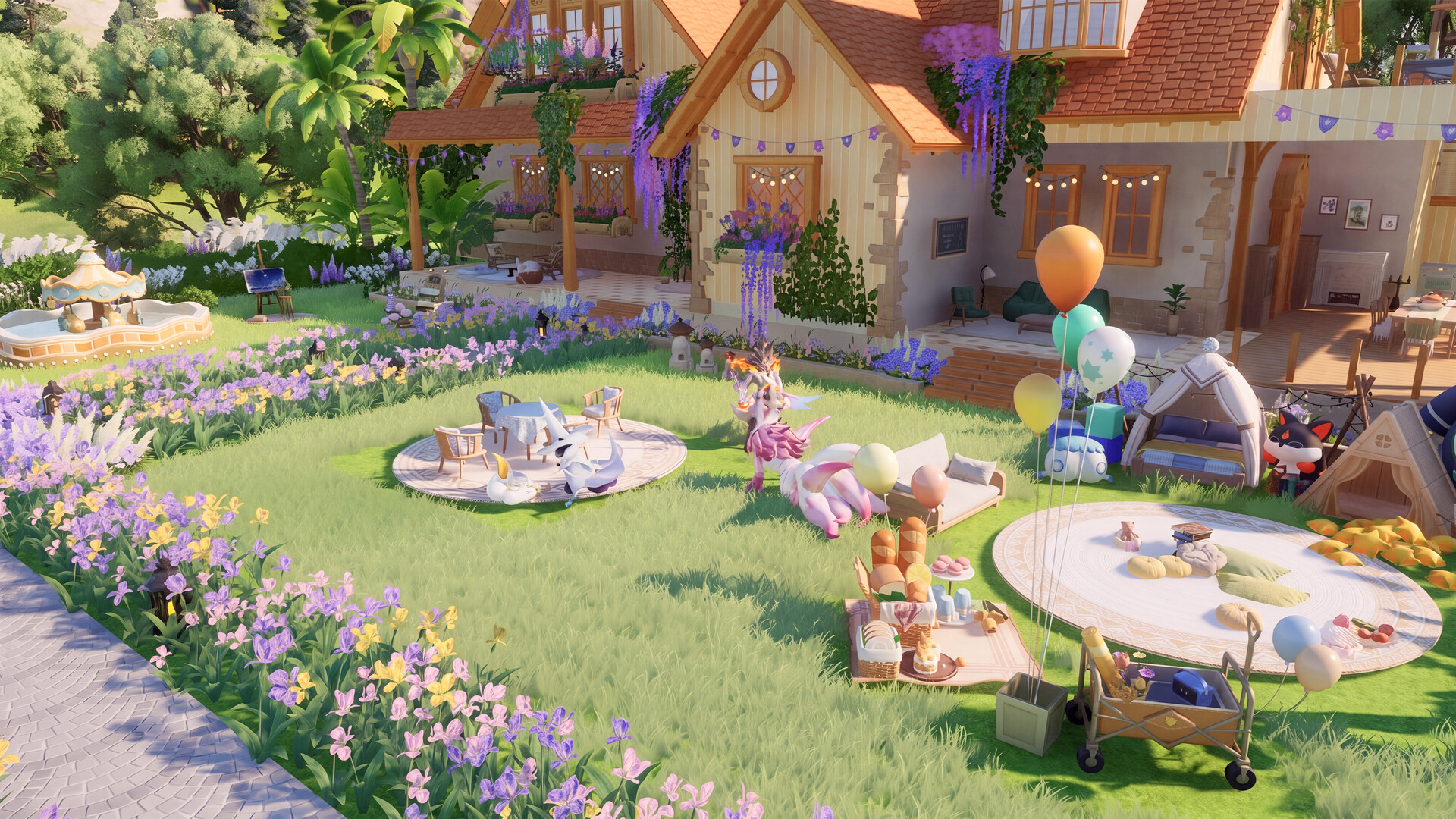
Homeland is the whole housing and production side of Aniimo: your plot, the facilities on it, the Aniimo working there, and the progression that decides how far it can expand. The official material describes it as your own slice of Idyll where you design and decorate a home, farm and harvest with your Aniimo, and spend time with them while the work gets done.
What that description underplays is that it is a real production sim, and it runs on a clock. Assign an Aniimo to a facility and it keeps working while you are logged out. Come back and there is produce waiting. That single property is what makes Homeland worth opening early rather than "someday".
Homeland is the entire system. Home is the space inside it — where the farmland, facilities and decorating happen. The RV is the vehicle that acts as the entrance and the progression hub, and it is what limits how developed everything else can become. When you hit a ceiling, it is almost always an RV level rather than a layout problem.
How to Unlock It
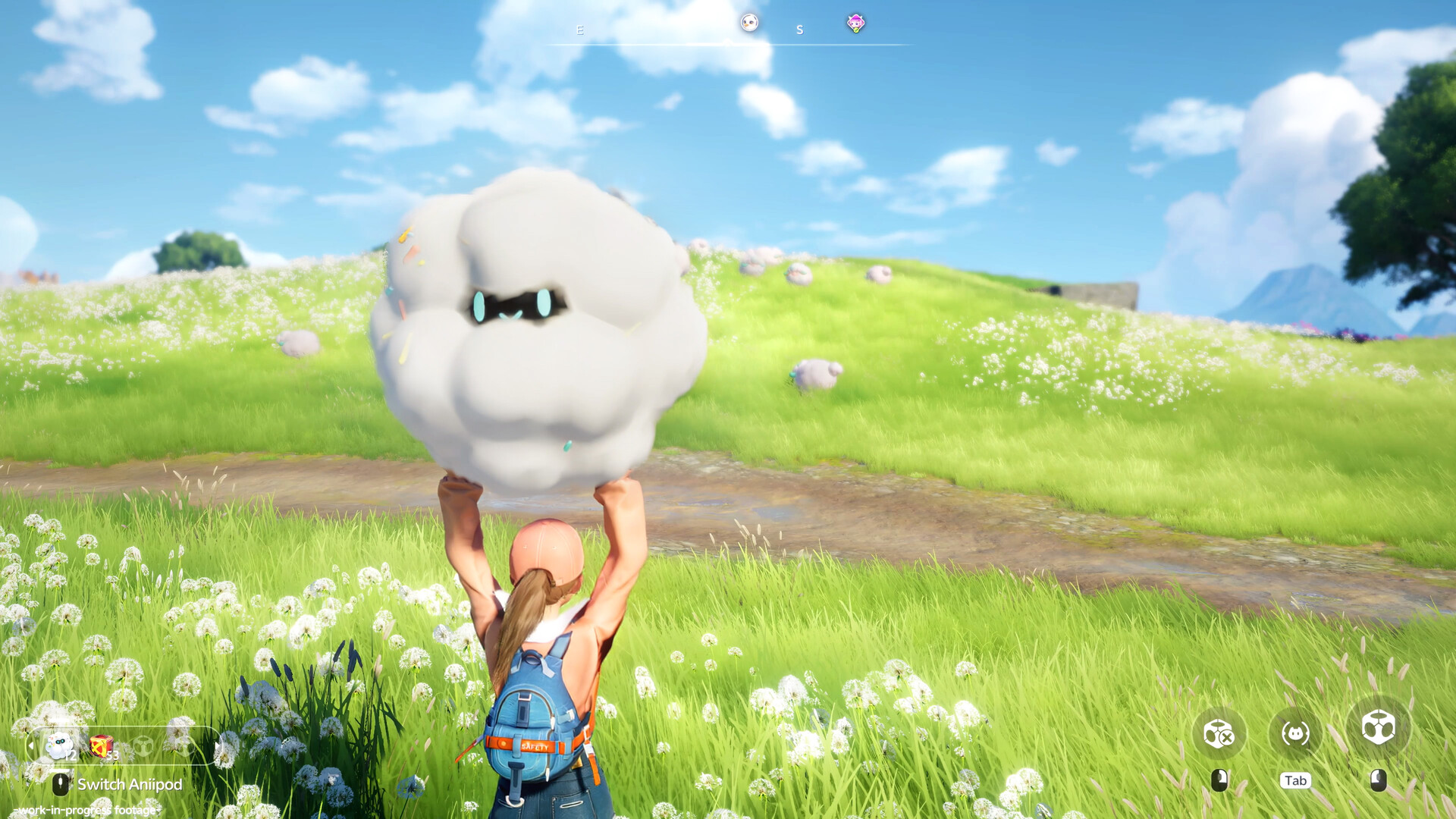
Homeland opens through an early quest chain, not through the shop.
Homeland unlocks through the story, not the shop, and the gate is a training milestone rather than a level number. The route, as documented across launch guides:
- Follow the main story to the Sea of Flowers. Homeland is deliberately held back through the opening hours, so it is not something you can stumble into early — keep the primary questline moving.
- Finish Wally's questline. The story leads you to Wally in the Sea of Flowers. Complete his tasks, then report back to Dr. Lewis: turning that report in completes your Student Level II training, which is the real trigger.
- Open the Elite Trainer tab. A new assignment appears there called "Prologue: Wondrous RV", which some menus label "Own Your Homeland". Track it.
- Find Fannie. A blue house icon appears on your world map; Fannie is waiting there beside her vehicle. Speak with her to receive your personal RV, then register it at an open-world RV park.
- Take the tutorial. From there the game walks you through the RV, the Homeland plot, placement mechanics and the automated resource systems, plus a guided introduction to farming by hand.
One thing to know going in: the tutorial makes you functional, not optimal. It does not explain much of the optimisation, which is what the rest of this page is for.
During that setup the game asks whether you have an Emberpup, because its heat is used to restore power. If you do not have one yet, catch one on the way in: it is also your first Fire worker, so it has a second job immediately.
RV 1 is a manual tutorial. Nothing is automated, you plant and harvest by hand, and it feels like busywork. Automation begins at RV 2, and that is the point where Homeland starts paying you back for the time you put in. Push through RV 1 rather than deciding the system is not for you.
The Production Loop
Once automation opens, everything runs on the same four-step cycle. Learn it once and every facility in the game works the same way.
- Place a facility. Farmland, woodland, a crafting table, a stove — each one levels up, and each level unlocks new recipes.
- Choose what it produces. This matters more than it looks, because the recipe decides which jobs the facility needs.
- Read the ability distribution. Every recipe shows a list of the jobs it requires. That list is the staffing problem you have to solve — any required job sitting at zero is a broken link in the chain.
- Assign Aniimo that cover those jobs. Then let it run. Output stacks up, and Carry workers move finished goods into storage so the facility does not clog.
The whole system in one sentence: pick the product, read the jobs it needs, cover every one of them, then make the slow ones faster.
And it keeps ticking whether or not you are online. Assign the workers, top up the Feed Box, and finished output stacks up in storage until your next visit — an idle Home with a full Feed Box is still a working Home.
RV Levels & Worker Capacity
RV level is the pace-setter for the entire system. It is what raises worker capacity, and every level is gated behind a Pathfinder title, Homeland missions and the state of the Home itself. The ladder below is the beta-measured progression that community guides have documented; the developers are re-verifying these numbers against the live build, so treat the shape as reliable and the exact figures as subject to tuning.
| RV level | Worker capacity | What it means for you |
|---|---|---|
| RV 1 | None | Manual tutorial — you plant, harvest and collect by hand. |
| RV 2 | 8 | Automation begins. This is the first level where staffing decisions matter. |
| RV 3 | 11 | Enough slots to cover every job instead of doubling up on your best one. |
| RV 4 | 14 | Room for specialists — Carry, Artisanship and Leisure can each hold a real worker. |
| RV 5 | 17 | Later production chains become viable without stripping your elemental coverage. |
| RV 6 | 20 | Comfortable. Most guides stop treating worker picks as mandatory around here. |
| RV 7 | 23 | Deepening jobs rather than covering them. |
| RV 8 | 26 | Late-game worker upgrades become worthwhile. |
| RV 9 | 30 | Maximum capacity in the documented progression. |
| RV 10 | No further increase | The final level shown in testing; it does not add worker slots. |
Because capacity is the bottleneck, the practical rule is: prepare a bench before you need it. Build a set of Aniimo that covers many jobs each while you are still on RV 1, so RV 2 does not open with you backtracking across the early map hunting for a Fire worker.
RV progression is also separate from your Pathfinder level. Levelling your character does not raise the RV on its own — the RV has its own requirements, and those requirements are what pace the base.
Jobs, and What a Job Level Is Worth
There are thirteen Homeland jobs. Nine of them share the elemental names you already know from combat, and four are general jobs that exist only in the Home. The elemental ones are work specialisations, not combat roles: a Fire Aniimo in Homeland is a heat and cooking worker, not a damage dealer.
| Job | What it covers |
|---|---|
| Fire | Cooking, smelting and supplying heat. |
| Grass | Planting seeds and gathering resources. |
| Water | Brewing, fetching water and watering plants. |
| Earth | Reclaiming land and mining resources. |
| Lightning | Manipulating electricity. |
| Ice | Cooling the Homeland environment. |
| Wind | Controlling wind to process products. |
| Dark | Harvesting crops, cutting plants, pickling and drying. |
| Light | Lighting the Homeland. |
| Carry | Hauling finished products from facilities into storage. Also labelled Hauling in some views — same job. |
| Artisanship | Crafting handcrafted goods. |
| Leisure | Producing items while playing — the most widely available general job. |
| Perfumery | The perfume station. The rarest job by a wide margin. |
The number beside a job is work speed, measured in workload per minute — not the creature's combat level. Community testing puts a level-1 worker at 60 workload per minute, with each additional level adding 15 on top.
| Job level | Workload per minute | Against level 1 |
|---|---|---|
| Lv 1 | 60 | Baseline |
| Lv 2 | 75 | 25% faster |
| Lv 3 | 90 | 50% faster |
| Lv 4 | 105 | 75% faster |
A level 4 worker sitting in a job the facility never uses contributes nothing at all. A level 1 worker covering a job the recipe actually requires keeps the entire chain moving. Cover every required job first, then improve the weakest one. That single rule matters more than any worker recommendation on this page.
Staffing Your Home
The best early workers are not the strongest creatures you own — they are the ones that cover two or three jobs from a single slot. With only eight positions at RV 2, a bench of multi-job creatures covers far more of the thirteen jobs than a bench of specialists.
Community testing has produced a starting eight that covers ten of the thirteen jobs between them — Fire, Water, Grass, Earth, Wind, Dark, Ice, Carry, Artisanship, Leisure and Perfumery, with Lightning and Light still missing. The picks worth knowing by name:
- Turbo — Wind and Leisure, and catchable in the opening grassland. The first worker worth keeping.
- Fragrancier — Dark, Leisure and Perfumery. Effectively the only early source of Perfumery, the rarest job in the system. Found in the Sea of Flowers region.
- Emberpup — Fire and Carry, and the creature the unlock quest asks you about. Not a long-term keeper, but it stops RV 2 opening with the Fire job missing.
- Glacy — Water, Ice and Carry. A clean finisher for the eighth slot.
- Shrubclaw, Stellarys and Thornblade — all multi-job, all worth keeping on the bench rather than in your battle squad.
Upgrading a slot is not about adding creatures at random. Replace a worker with one that keeps the same job coverage and raises the level. Two replacements do most of the early work: Scorchhowl in for Emberpup (same Carry, Fire jumps to a much higher level, and it is a normal catch once Beast Fang Ridge is on your route), and Leafy in for Pranky (Water improves, Carry stays, and it adds Grass).
Prismana Worker Upgrades
Prismana forms matter in Homeland even when their combat stats do not change. The official form entries publish a separate job vector for each form: existing jobs can rise, and a new element job can appear when the Prismana typing adds that element. For the six early Prismana choices, the complete worker vectors are:
| No. | Prismana worker | Official Homeland jobs | Difference from basic form |
|---|---|---|---|
| NO.003 | Scorchhowl | Fire 4 · Carry 4 | Fire 3 → 4; Carry 3 → 4 |
| NO.018 | Turbo | Leisure 4 · Wind 4 · Dark 3 | Leisure and Wind rise from 3 to 4; Dark is added at 3 |
| NO.021 | Witchin | Artisanship 4 · Grass 3 · Dark 4 | Artisanship 2 → 4; Grass 1 → 3; Dark 2 → 4 |
| NO.034 | Thornblade | Water 3 · Grass 4 · Artisanship 4 | Grass and Artisanship rise from 3 to 4; Water is added at 3 |
| NO.062 | Pawney | Carry 4 · Dark 4 | Carry 3 → 4; Dark 3 → 4 |
| NO.069 | Grizbo | Earth 4 · Carry 4 · Dark 3 | Earth and Carry rise from 3 to 4; Dark is added at 3 |
Best pure worker gain: Witchin improves all three jobs and reaches level 4 in Artisanship and Dark. Best coverage gains: Turbo, Thornblade and Grizbo each add the element introduced by their Prismana typing. Do not take a rare form only for Homeland if it leaves a combat gap, but do not park one in storage either — these are materially better worker profiles than their basic forms.
Two rules that catch people out
- A Homeland worker cannot fight for you. An Aniimo assigned to the Home cannot sit in your active field roster. If one of your favourites is also a great worker, catch a second copy — duplicates in Homeland are allowed and are often the right answer.
- Keep the Feed Box stocked. Your Home produces food and the workers eat it from the Feed Box. Keep it topped up and the base keeps generating resources while you are offline; run it dry and the workers stop, which silently stalls everything you set up.
What You Grow and Build
Home Season boost and Harvest Gathering opening
The Home Season boost in resource update 1.0.3732728.0 makes Moondew Radish and Waxing Moon Pepper mutate more often. Products crafted with those crops also earn more Harvest Moon Points, so your seasonal crop production now pays more toward the event.
Harvest Gathering is not open yet as of October 19. Stage 3 opens at the regional times below; you can earn rewards by hosting or joining a gathering once it opens. APAC's opening falls on October 21, not October 20.
| Server | Harvest Gathering opens |
|---|---|
| Aniimo-Europe | 2026-10-20 20:00 UTC+0 |
| Aniimo-Americas | 2026-10-20 16:00 UTC-4 |
| Aniimo-Apac | 2026-10-21 04:00 UTC+8 |
Production splits into three rough groups, and knowing which is which saves a lot of confusion when you are reading the build menu:
- Growing. Farmland and woodland plots produce the raw crops, wood and materials your Aniimo harvest. Farmland is the deepest tree — it keeps unlocking recipes for several levels — and woodland runs alongside it for timber, fruit and rubber. Smaller facilities cover specialist goods like wool, sea salt and pearls.
- Production. Crafting tables, stoves and brew kegs turn raw goods into finished items: food, textiles, crafts and perfume. Each level unlocks another tier of recipes.
- Infrastructure. Facilities that power or support the rest of the Home rather than producing an item — including the Hatchinator, which is why your egg incubation sits inside this system.
Seeds come from a Seed Shop that stocks field crops and trees, with more unlocking as the Homeland levels up. Range yourself across a few crop types early rather than committing a whole plot to one harvest, because later recipes ask for variety.
Everything runs on Home Coins, one of the currencies that expands the production side of your Home. Early crops sell through the co-op store for coins, and there is a buyback option there too.
Customising Your RV
The RV is your base's entrance, spawn point and progression hub — and it is also the one part of Homeland you can make unmistakably yours. Once it is registered at a park, its exterior is customisable piece by piece rather than as a single preset:
- Chassis paint — the main body colour. The early palette runs Pink, Yellow, Blue and Green.
- Top decorations — attachments for the roof and upper body.
- Edge trims — the decorative framing around the shell, including gray and wicker-style pieces.
- Decals — cosmetic designs unlocked through progression.
- Chassis parts — extra exterior components that swap independently of the paint.
Because the pieces are independent, you are not locked into one colour scheme — a green body with pink trim is a valid build. Extra cosmetics come from progression rewards, daily check-ins and specialised vendors, including the pair Joff and Jaff, who can be found in Astra and other open-world locations.
At an early Homeland level players report a cap of around thirty outdoor items, covering furniture, fences, string lights and other decorations. Thirty slots disappear quickly once you start building a resort, so spend them on functional pieces first and treat cosmetics as a reward for later levels.
Common Mistakes
- Treating RV 1 as a failure. It is a tutorial. The system does not show you what it can do until RV 2.
- Hiring the strongest creatures instead of the broadest ones. At eight slots, one creature covering three jobs beats three creatures covering one each.
- Ignoring the ability distribution panel. Every recipe tells you exactly which jobs it needs. Staffing from the creature list instead of the recipe is why a facility sits half-idle.
- Leaving the Hatchinator empty. Incubation runs in real time whether you are logged in or not. An idle Hatchinator overnight is a wasted hatch.
- Letting the food run out. Workers stop, production stops, and nothing on screen tells you why.
- Putting your best combat Aniimo to work. It can do one or the other. Catch a duplicate.
What Launch Added
Homeland received the largest content pass of any system for the September 16 launch. Confirmed in the developers' pre-launch letter:
- House building and a multi-area Home, with far more furniture to place — including furniture groups you can share with other players via codes.
- Interactive pieces you can place out in the open world, not just inside the Home.
- Idle AI and a petting interaction for the Aniimo living at your Home, so the creatures working there behave like residents rather than props.
- Buyback through the Co-op Store, making it easier to recover from a sale you regret.
- RV dispatches that can produce Prismana-trait eggs — the clearest reason yet to keep the base running, since it now feeds the rarest outcomes in the egg system.
- Seasonal events, and a soil-tilling social interaction that earns you a share of another Pathfinder's harvest.
The dispatch point is worth repeating: with RV dispatches producing Prismana-trait eggs, Homeland is no longer only a materials machine. It is a slow but reliable route toward the game's rarest variant — see Eggs & Hatching for what those eggs do.
Version 1.1 Home-management controls
Version 1.1 makes the management screen quicker to use. Home Shop and Co-op Store now have direct shortcuts, and an E-Mode toggle is available without working back through the previous menu path. Controller navigation was also revised across Build Snapping, Home Layouts, the Home Index, Park Buffs, Home Season Lunar Crops and Building Controls.
FAQ
How do you unlock Homeland in Aniimo?
Through the story. Follow the main questline to the Sea of Flowers, finish Wally's tasks, report back to Dr. Lewis to complete your Student Level II training, then track the "Prologue: Wondrous RV" assignment in the Elite Trainer tab. That leads you to Fannie, your RV, and registration at an RV park. A tutorial then walks you through manual farming.
What is the difference between Homeland, Home and the RV?
Homeland is the whole system, Home is the space you build in, and the RV is the entrance and progression hub that limits how developed the Home can become.
How do you upgrade the RV?
You complete its requirements: placing the required production plots, completing Homeland missions and reaching a Pathfinder title. Later levels also want the Home itself more developed, with more farmland, woodland and mineral piles.
How many workers can you have?
Worker capacity starts at 8 on RV level 2 and rises to 30 at RV level 9 in the documented progression. RV 1 has no worker slots at all — it is the manual tutorial phase.
Can a Homeland Aniimo also fight in my team?
No. An Aniimo assigned to the Home cannot stay in your active field roster. Catch a second copy if you need it in both places.
Does Homeland production continue while I am offline?
Yes. Assigned Aniimo keep working, and finished goods stack up in storage until you collect them. Keep food in stock, though — workers that run out stop producing.