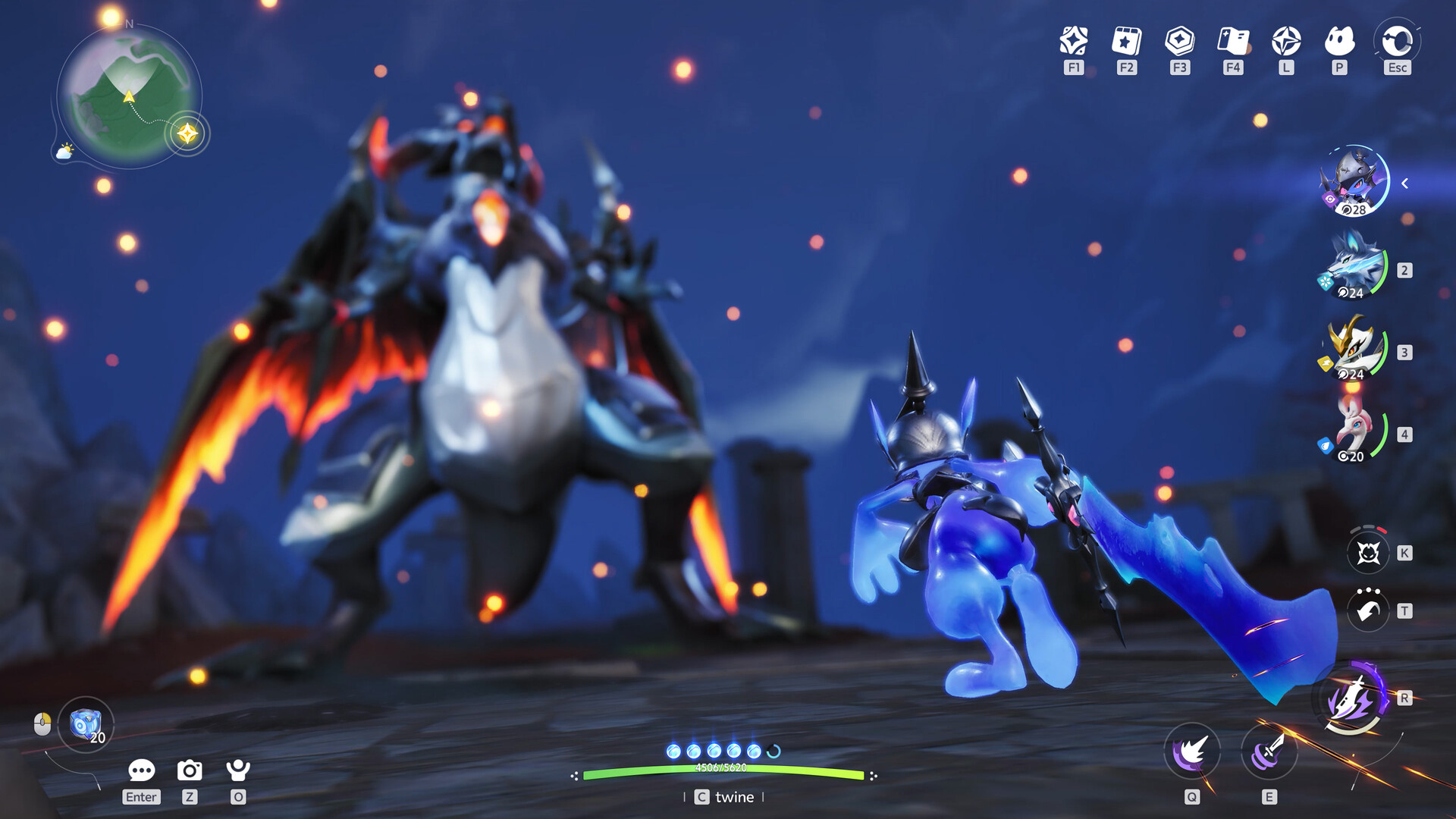
The Nine Elements
Aniimo splits every creature across nine elements. These are the exact element names used in the game's own index filters, so they are the names you will see in-game and in the official database:
- Holy
- Fire
- Ice
- Dark
- Electric
- Grass
- Water
- Rock
- Wind
You will see some community sites call these elements by different labels — "Lightning" for Electric, "Light" for Holy, "Earth" for Rock and "Nature" for Grass. They are describing the same nine elements; the names above are the official ones, which is why we use them throughout this site.
An Aniimo's element is a fixed part of its identity, not something you change by building it differently. A few Aniimo carry a dual element — two elements at once. Those tend to be the ones worth studying closely, because they take resisted damage from more sources and can hit more weak points in return.
Element Weakness Chart
This is the table worth bookmarking. Read it as: pick the row matching your attacker's element, then read across to find the defender's element. Strength means ×1.6 damage, Weak means ×0.625, and a dash is a neutral ×1. There are no immunities — nothing in the game takes zero from an element — so a resisted matchup is survivable and a strong one is decisive.
| Attacker ↓ / Defender → | Holy | Fire | Ice | Dark | Electric | Grass | Water | Rock | Wind |
|---|---|---|---|---|---|---|---|---|---|
| Holy | Weak | — | — | Strong | Weak | — | — | — | Strong |
| Fire | Weak | Weak | Strong | — | — | Strong | Weak | Weak | — |
| Ice | — | Weak | Weak | — | Strong | — | Strong | Weak | Weak |
| Dark | Strong | Strong | — | — | — | Strong | Weak | — | Weak |
| Electric | — | — | Weak | — | Weak | — | Strong | Weak | Strong |
| Grass | Weak | Weak | — | — | — | Weak | Strong | Strong | — |
| Water | Weak | Strong | Weak | — | — | Weak | Weak | Strong | — |
| Rock | — | — | Strong | Weak | Strong | Weak | Weak | Weak | — |
| Wind | — | — | — | Strong | Weak | Strong | — | — | Weak |
An element attacking its own type is resisted, not neutral — read the diagonal and you will see a Weak in almost every row. Fire into Fire is ×0.625, and so is Grass into Grass. Mirror matches are the matchup new players most often misread as even.
Element relationships are balance data, and balance data changes. The developers tune these multipliers through patches, and a matchup that reads "Strong" today can be adjusted. Treat the table as a working reference rather than a permanent law, and re-check it after any major patch.
What Each Element Is Good At
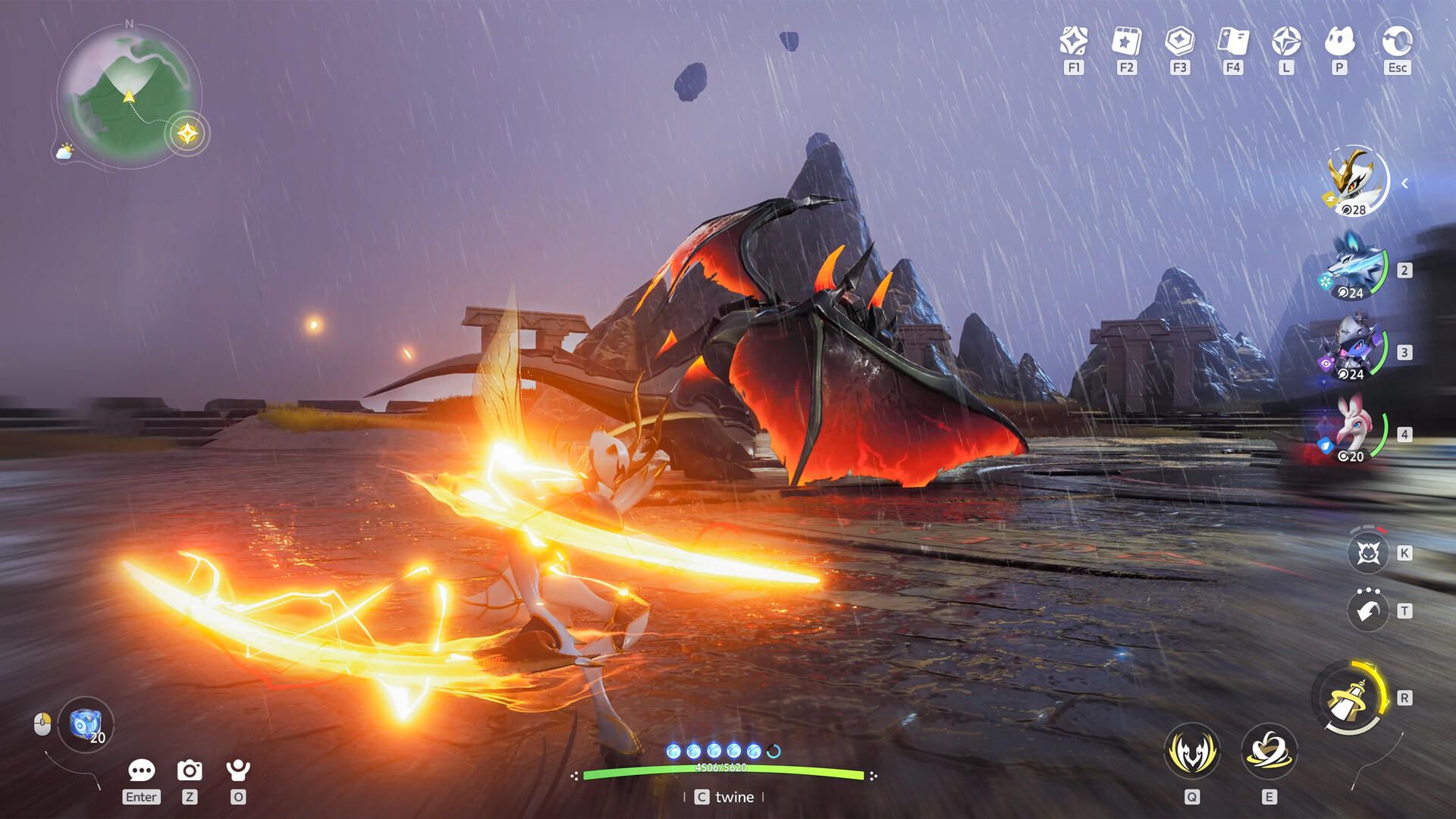
Element match-up decides most fights before raw stats come into it.
Holy
Holy is the game's rarest element — only two Aniimo carry it in the current roster, Helion and Lunara. It is strong into Wind and Dark, which makes it the cleanest answer to a Dark-heavy composition, and Dark answers back just as hard: Holy and Dark are the only pair that hit each other for ×1.6, so a Holy-versus-Dark fight is a race rather than a free win. What Holy really buys you is the safest defensive profile in the game — it resists Fire, Water, Grass and its own element, and only Dark hits it hard.
Fire
Fire is the most beginner-friendly offensive element. It is strong into Ice and Grass, and the four elements that blunt it — Fire, Water, Rock and Holy — are easy to see coming, which means you can plan around them. It resists Ice and Grass in turn and takes extra damage from Water and Dark. Fire Aniimo tend to be straightforward damage dealers: Emberpup's line is the obvious starting point, and it evolves into a genuine damage threat by its later stages.
Ice
Ice is a technical element. It is strong into Water and Electric — two of the most common elements you meet early — and it pairs naturally with control, slowing or locking down a target before it acts. The cost is on defence: Ice resists only itself, and Fire and Rock both hit it hard, while Fire, Ice, Rock and Wind blunt its own attacks. Ice also appears on dual-element Aniimo, which makes those particular creatures flexible in ways single-element Ice is not. Malevsera sits at the end of the dex as Ice's highest-total DPS-role option.
Dark
Dark has the widest offensive coverage in the game: it hits Fire, Grass and Holy for ×1.6, and only Water and Wind blunt it. That is the opposite of the element's reputation — Dark is an attacker's element, not a defensive one. On defence it is the most exposed element in Aniimo: it resists only Rock, and Wind and Holy both hit it hard, so every other element does at least neutral damage to a Dark Aniimo. Dark is also where the highest base stats cluster, so you are trading defensive comfort for raw output.
Electric
Electric is a strong attacker with two clear targets: Water and Wind. Its own weaknesses are worth memorising because they are less obvious than the rest of the chart — Electric, Ice and Rock all resist its attacks, and Ice and Rock hit it hard in return. Grass is neutral in both directions, so the element you might expect to counter Electric does not. Electric Aniimo like Bolty bring fast, high-pressure skills, and Electric's ability to punish Water makes it valuable in regions where Water spawns heavily.
Grass
Grass is a dependable defensive element. It is strong into Water and Rock, resists Water, Rock and itself, and takes extra damage from Fire, Wind and Dark. The catch is on offence: Fire, Grass and Holy all blunt its attacks, so a pure Grass attacker runs out of targets quickly. Grass Aniimo frequently carry support and healing traits rather than pure damage, and the Iris line is a good example of a Grass creature that gives you utility and damage at once.
Water
Water is the element that quietly does more than it looks like. It hits Fire and Rock hard, and while its attacks are blunted by Water, Grass, Ice and Holy, Water Aniimo are used for more than attacking — mobility, traversal and support traits show up across the Water roster. Defensively it is comfortable: Fire, Water, Rock and Dark all do reduced damage to it, and only Grass, Electric and Ice hit it hard. Skippy's line is one of the game's best early support options.
Rock
Rock is the durable element. It is strong into Electric and Ice, and it is one of the most comfortable defensive profiles in the game — Fire, Electric, Ice and Rock all do reduced damage to a Rock Aniimo, and only Grass and Water hit it hard. The trade-off is offence: Water, Grass, Rock and Dark all blunt its attacks, which is the narrowest attacking profile of the nine. Rock Aniimo skew toward high physical defence and toughness, which makes Rock a natural choice for the front of a team — something that can hold a fight while your damage dealers work. Geodeback and Cozite show the archetype clearly: slow, hard to kill, and useful in competitions where survival matters as much as damage.
Wind
Wind is the mobility element. It is strong into Grass and Dark, and only Electric and Wind blunt its attacks. On defence it is thin — Electric and Holy both hit it hard, and it resists nothing but its own element — so a Wind Aniimo is worth bringing for speed and control rather than for surviving a bad matchup. Wind Aniimo tend to be fast and traversal-focused. The Chirpi line is the clearest example, evolving through several stages into creatures with high speed and utility. Wind is also excellent for exploration, since its Aniimo often bring traversal abilities that make crossing the map faster.
Building a Team Around Elements

Two attacking elements plus one sustain option covers the vast majority of encounters in Idyll.
Element coverage is the single fastest way to improve at Aniimo's combat. A party of four Aniimo of the same element will lose to a balanced party of similar power, every time. Here is the practical approach:
- Cover your damage first. Have at least two different attacking elements so that no single enemy can resist everything you do.
- Pick your answer to the region you are farming. If you are working an area where Water Aniimo spawn heavily, an Electric attacker turns a slow grind into a fast one.
- Keep one defensively solid option. A Rock or Grass Aniimo that can absorb a bad turn protects your team when a fight goes wrong.
- Respect dual elements. A Fire/Dark Aniimo resists different things than a pure Fire one. Check the actual element tags rather than assuming.
- Remember Traits matter as much as elements. A trait that increases damage against element-weak targets can make a theoretically neutral matchup hit close to a real weakness — Emberpup's Scorching Flames is the early example.
Before committing to a team for a hard fight, open the full Aniimo list and filter by the element you are struggling against. Seeing every available option in that element at once is faster than trying to recall them.
Dual-Element Matchups
Thirteen of the Aniimo in the current roster carry two elements at once, and a dual element is not cosmetic. It widens what the creature threatens and adds a second set of weaknesses at the same time, which is the trade you are actually making every time you build one. Here is the full list, with the beta-era entries marked.
| Aniimo | Elements | Note |
|---|---|---|
| Inferlupa | Fire Dark | The Fire/Dark end of the Emberpup line |
| Glacy | Water Ice | Also one of the seven Heal Aniimo |
| Leafy | Grass Water | — |
| Witchin | Dark Grass | Added to the free Prismana selector |
| Budclaw | Rock Grass | — |
| Shrubclaw | Rock Grass | 550 stat total, a top-band BREAK |
| Lavazar | Fire Rock | — |
| Magmarex | Fire Rock | — |
| Somniwing | Wind Grass | Beta-era entry |
| Reefish | Rock Water | Beta-era entry |
| Coraliz | Rock Water | Beta-era entry, 572 total |
| Bubbeep | Grass Water | Beta-era entry |
| Glameep | Grass Water | Beta-era entry, the highest-total Heal in the roster |
Prismana typing can differ from the basic form
A Prismana form is not automatically a stat upgrade, but it can change the element pair you need to read on the chart. The official form entries for the six early Prismana choices show three real typing changes and three unchanged typings:
| No. | Aniimo | Basic form | Prismana form |
|---|---|---|---|
| NO.003 | Scorchhowl | Fire | Fire — unchanged |
| NO.018 | Turbo | Wind | Dark Wind |
| NO.021 | Witchin | Dark Grass | Dark Grass — unchanged |
| NO.034 | Thornblade | Grass | Grass Water |
| NO.062 | Pawney | Dark | Dark — unchanged |
| NO.069 | Grizbo | Rock | Dark Rock |
Turbo, Thornblade and Grizbo therefore need to be evaluated as dual-element creatures only when you are using their Prismana forms. A basic Turbo is still pure Wind, a basic Thornblade is still pure Grass, and a basic Grizbo is still pure Rock. Scorchhowl, Witchin and Pawney keep their original typing in Prismana form.
How the two elements combine
Read the chart twice. A dual-element Aniimo attacks with both of its types, so its strong matchups are the union of its two rows — it also inherits the resists of both rows, which is why a dual attacker is not simply better. Witchin, for example, throws Dark and Grass at once: Dark covers Fire, Grass and Holy, Grass covers Water and Rock. Defensively the same logic runs the other way, and it is the side that costs you. A dual element is punished by the union of its two columns, so it has more attackers to worry about, not fewer.
The developers publish each element's matchups separately and no rule for combining them, so there is no official figure to look up for a dual matchup. Community readings multiply the two checks together, and the useful consequence of that is cancellation: Fire into a Water/Ice creature such as Glacy meets a resist on one side and an advantage on the other, which comes back out at neutral damage rather than a clean win. Two advantages stack into a considerably bigger hit, and two resists into a very small one. Treat any combined figure as a reading rather than a published number, and check both rows before you commit to a target.
Building around a dual element
- Check both columns, not just the one you remember. The element a player associates with a creature is often not the element that punishes it hardest.
- Treat a doubled weakness as the real cost. If both of a creature's types take extra damage from the same attacker, one enemy choice turns a safe pick into a fragile one.
- Use dual typings to cover your own resist. A creature that resists what your main damage dealer cannot is worth more than the stat total suggests.
- Remember stages change type. Dual typing usually appears at the end of a line, so the creature you are training now may not be the one you end up with.
Elements and Roles Are Different Things
New players often treat element and role as the same axis. They are separate, and understanding the split is what makes team building click.
Element is the type matchup — what you are strong and weak against. Role is what the Aniimo actually does in a fight. Aniimo come in these roles:
| Role | What it does in a fight |
|---|---|
| DPS | Deals damage. Your primary offensive slot. |
| Heal | Restores health, keeping the team alive through longer fights. |
| Support | Buffs allies and debuffs enemies rather than dealing damage directly. |
| BREAK | Specialises in breaking enemy defences and stagger states — the answer to armoured or tanky targets. |
| REGEN | Sustained recovery over time, useful for long exploration runs where you do not want to stop. |
The useful consequence: two Aniimo of the same element can fill completely different jobs. A Grass Heal and a Grass DPS are not interchangeable, even though they share matchups. When you build a team, pick roles first and then use elements to sharpen the matchup.
FAQ
How many elements are in Aniimo?
Nine: Holy, Fire, Ice, Dark, Electric, Grass, Water, Rock and Wind.
Which element is the strongest?
There is no single strongest element, and the nine are not arranged in a tier order. On pure offensive coverage Dark sits at the top — it hits Fire, Grass and Holy for ×1.6, the widest reach of any element — while Holy has the safest defensive profile, resisting four elements and taking extra damage from only Dark. Strength in Aniimo is about matchup, not a ranking.
Can an Aniimo have two elements?
Yes. Thirteen Aniimo in the current roster carry two elements, which changes both what they resist and what they threaten. Dual-element creatures are listed in the section above.
How does a dual-element Aniimo work in a fight?
It attacks with both of its types and defends with both. On offence that means it can use whichever of its two types performs better against the target, so its strong matchups are the union of two rows on the chart. On defence it inherits every weakness of both types, which is why a dual element is more exposed rather than simply stronger. The game lists each element's matchups separately and publishes no formula for combining them, so read the two rows side by side.
Does element matter more than stats?
For most fights, the element matchup will decide the outcome before stats do. A well-matched lower-power Aniimo regularly beats a poorly matched stronger one.